
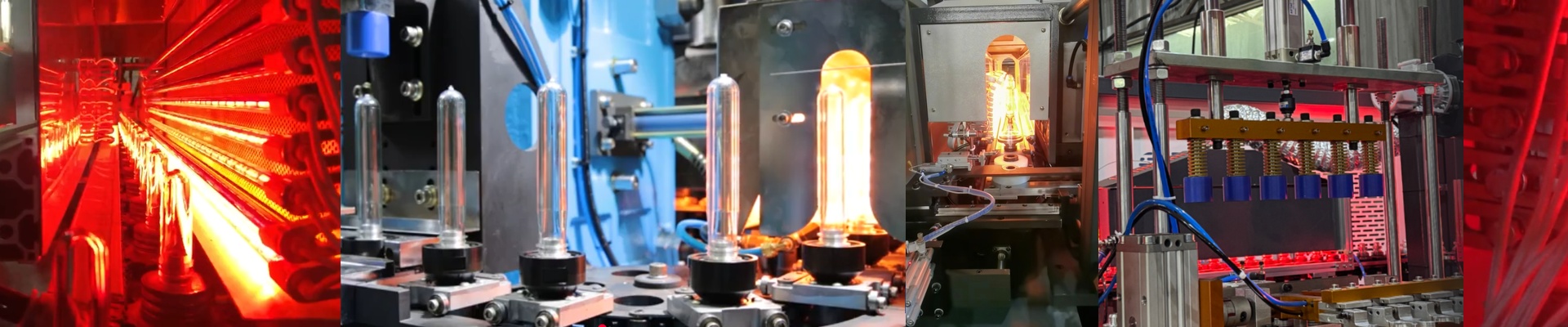
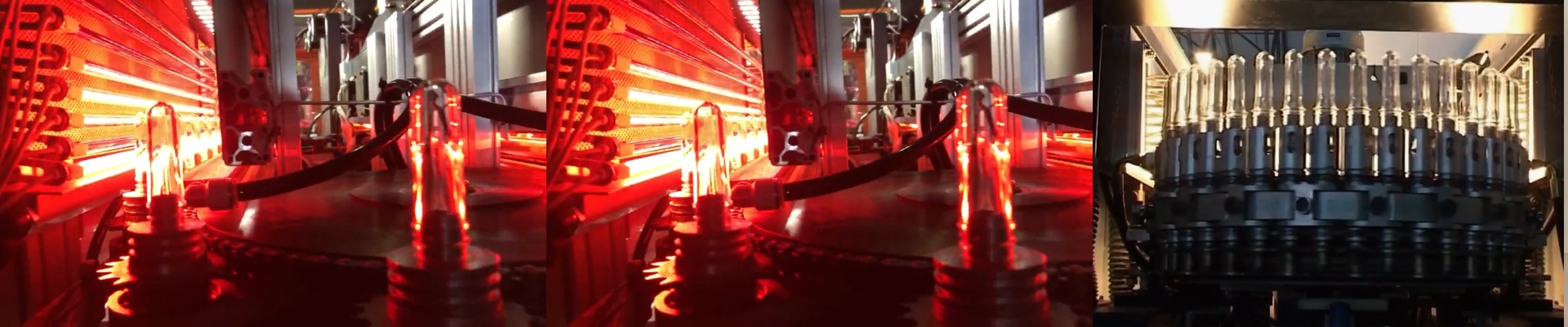
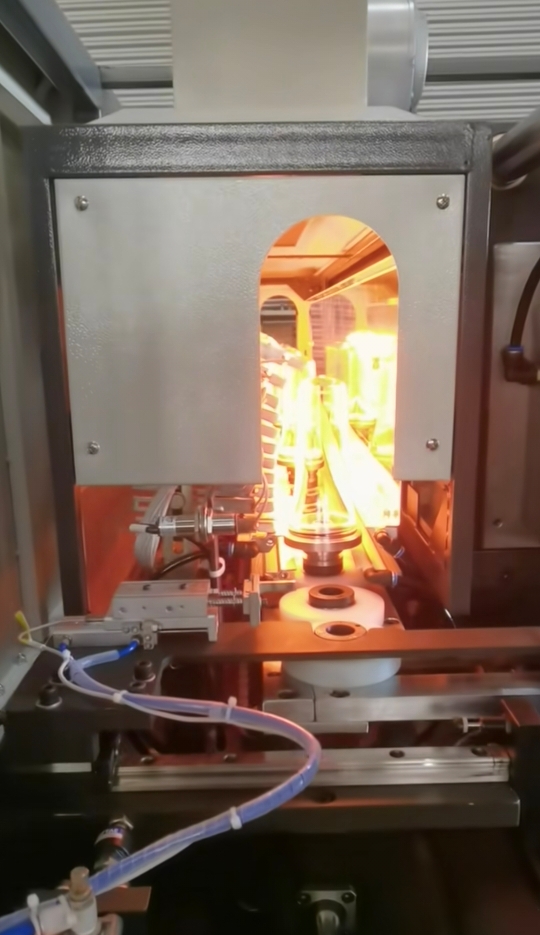
On a Husky HyPET 120 line, the heating section is where the whole run starts to make or break itself. When the original heater starts drifting—uneven preform skin temperature, a wider sweet spot, or lamps that just flat-out fail—you don’t just lose heat. You lose shots. You lose schedule. And you lose your temper chasing PET crystallization and bottle quality with tired halogen elements.
What matters, technically
We build the HyPET 120 replacement heater to sit inside the same thermal envelope the machine was designed around: same watt density, same lamp geometry, and the same R7s connector interface so the heating tunnel swaps in without rewiring. We spec short-wave infrared quartz emitters because PET eats up that band—fast response, tight control over the preform surface. Output stays repeatable across the lamp life, and the reflector geometry keeps the energy pattern consistent so every preform sees the same heating profile.
Why this makes sense on a HyPET 120
On the HyPET 120, stable preform heating is what keeps stretch blow molding honest. With this replacement, you get quicker recovery to set temperature after startup, less swing during production, and more predictable bottle wall distribution. That means fewer rejects, fewer micro-adjustments at the blow station, and fewer surprise stops. Energy use drops because the heater hits setpoint and holds it efficiently, and you stretch the service interval compared to older halogen designs.
The practical details
Installation is straightforward—mounting and R7s connections match the original footprint—but you still need to confirm the controller setpoint, PID tuning, and reflector cleanliness. If the existing sensor or thermocouple is out of calibration, a new heater will still run wide. Plan the swap during a scheduled stop, and double-check that line voltage and cooling airflow match the spec.