
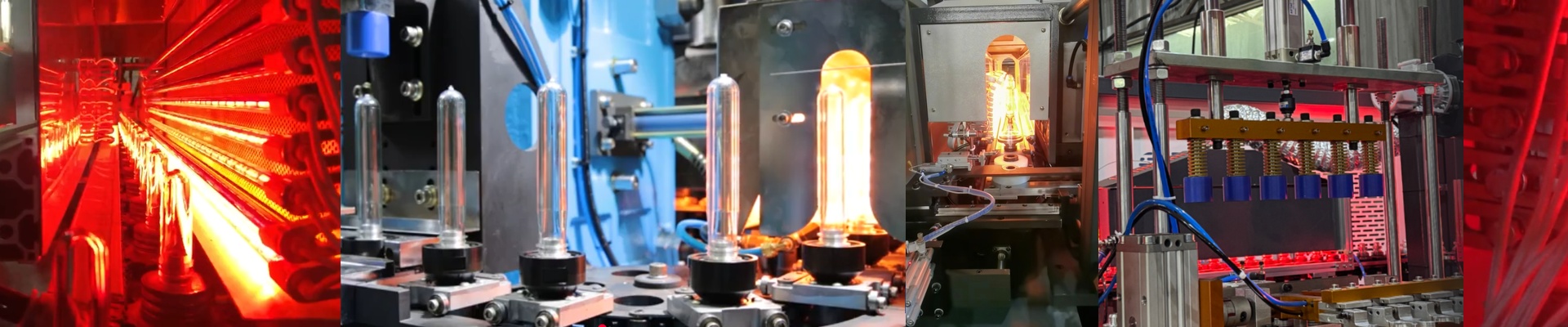
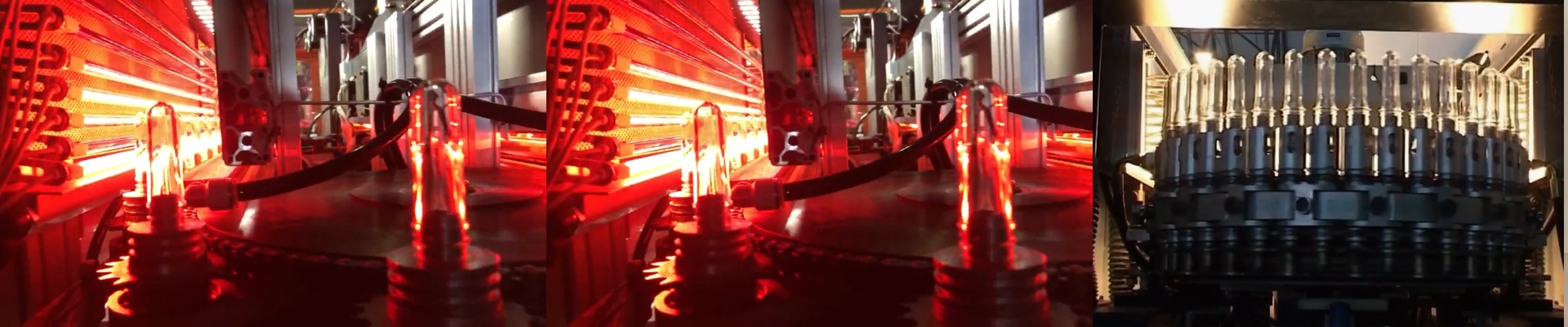
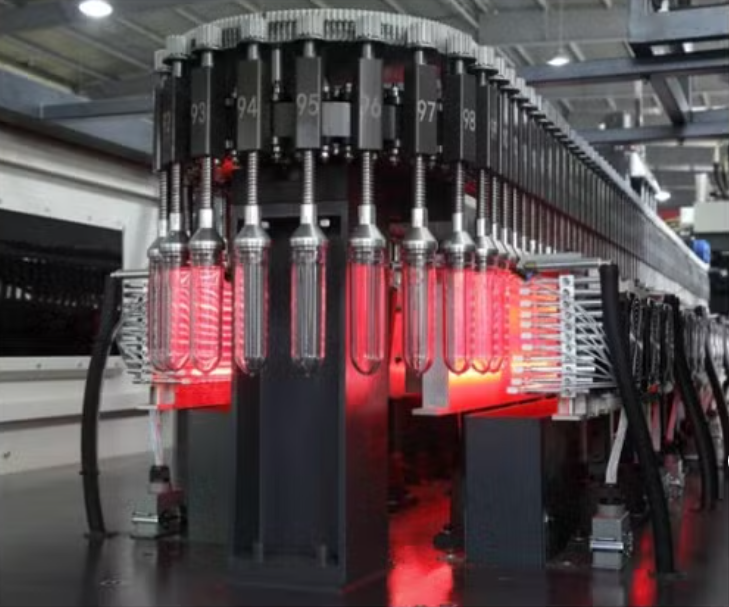
On a reheat stretch blow molding line, the heating tunnel is where the shift gets made—or blown. Preforms ride through, the lamps hit them, and the temperature profile has to land in the same tight window, every time. If lamp output drifts, you see it fast: inconsistent stretch, flashing, or weak necks. And when lamps burn out early, you’re shutting down the blow molder to relamp. Downtime isn’t a metric on a screen—it’s real money. We built these reheat stretch blow molding lamps to drop in and replace the OEM-style halogen and quartz infrared emitters in the heating tunnel—without forcing you to rework the machine’s rhythm, the preform handling, or the operator’s routine. You keep the same mounting, the same wiring interface, and the same control expectations. What changes is heat consistency, energy draw, and what shows up on the maintenance calendar.
What actually matters, technically
These aren’t just “heaters.” They’re matched, high-stability infrared emitters engineered to deliver repeatable output inside a stretch blow molding machine’s heating tunnel.
- Spectrum matched to PET absorption: PET soaks up energy strongly in the near-infrared range. Our lamps target the preform wall directly, heating the material volume instead of just the surface. That means faster, more even heating—and a shorter heating window for the same stretch ratio.
- OEM-grade fit, 1:1 replacement: We match the lamp length, arc length, diameter, and base/connector type—most commonly R7s—across blow molders. You swap one lamp for another without modifying brackets or changing tunnel geometry.
- Built for continuous industrial duty: The heating tunnel is a tough place—high power density, heat soak, airflow, and vibration. These lamps are engineered to survive the production floor, not just a clean bench.
- Fast thermal response: Infrared emitters come up to target output quickly. That means the heating zone gets on temperature faster at startup, which cuts scrap and shortens changeover.
- Stable output over life: When output drifts, you end up chasing setpoints with more power—or you accept temperature swings. These lamps hold output tightly, so the heating profile stays repeatable shift after shift.
Why this works where it matters
In reheat stretch blow molding, the lamp is part of a closed loop. Preform temperature, lamp output, blow ratio, and bottle quality are all coupled. If lamp output is inconsistent, you spend time adjusting power, tweaking conveyor speed, and reworking the heating profile. Our lamps remove that noise.
Consistent heat means fewer quality escapes
When lamp output is steady, preform temperature is steady. Steady preform temperature gives you predictable stretch behavior, which improves wall thickness distribution and reduces flash. In real plants running these lamps, “heat-related” scrap drops—less variability at the weigh scale, fewer visual defects, and more bottles passing leak test the first time.
Energy savings that show up on the bill
Infrared heating is efficient because it delivers energy where it’s needed—straight into the preform. We’ve measured installations where total heating tunnel energy drops by double-digit percentages compared with older halogen/quartz setups. On a line that runs 24/7, that adds up fast.
Fewer lamp changes, more uptime
A lamp change isn’t just the cost of the lamp. It’s opening the tunnel, the labor, the restart, and the scrap during warm-up. These lamps are engineered for long life in the heating tunnel, so replacement frequency falls. Less relamping means more minutes of production per week and fewer schedule interruptions.
Quantified results—what you can realistically expect
We don’t ask you to take a slogan on faith. Track the numbers. Across multiple reheat stretch blow molding lines, swapping in matched infrared lamps has produced results like these:
- Energy reduction: Typically 15–25% lower energy consumption in the heating tunnel, measured at the service panel.
- Lamp life extension: Often 2× to 3× fewer lamp changes per year, depending on the original lamp type and operating power.
- Scrap reduction: Reduced heat-related scrap, often in the 10–30% range on bottles where temperature sensitivity drives defects.
- Startup and changeover: Faster warm-up means less startup scrap and quicker profile stabilization after changeover. Your exact gains will vary with the blow molder model, preform, bottle weight, and line speed. But the direction is consistent: stable heat, less waste, lower energy, and fewer maintenance stops.
The practical details you need to plan for
A lamp replacement should be straightforward, but there are real-world constraints you can’t ignore.
- Match the spec, not just the shape: A lamp that “fits” can still underperform if wattage, voltage, arc length, and base type aren’t matched to the machine’s heating zone design. Give us the blow molder model and the existing lamp part number so we can supply the correct emitter.
- Controls compatibility: Most machines control heating through standard SSR or transformer-based circuits. Our lamps work within those methods, but wiring, fusing, and protection need to match the original design. If your line uses older controls, run a quick electrical check before swapping.
- Clean power, clean performance: Voltage fluctuations and harmonics shorten lamp life and push output out of tolerance. Make sure the supply to the heating zone is stable and properly protected.
- Handling and alignment matter: Infrared lamps are tough, but contamination and mechanical stress hurt performance. Keep the lamp surface clean, avoid touching the tube, and maintain correct alignment in the tunnel. Misalignment changes the heating profile even when the lamp itself is perfect.
- One practical trade-off: Infrared lamps deliver fast response and high efficiency, but the heating zone geometry is fixed. If you want the biggest step change, pair the lamps with a proper temperature verification routine—use a pyrometer or thermal profile check at the preform, not just a power reading. If you run a reheat stretch blow molding line—Sidel, Krones, SIPA, Husky, SACMI, Nissei ASB, or any OEM platform—the heating tunnel is a lever you can pull every shift. Put in matched infrared lamps, and you pull that lever toward repeatability, lower energy cost, and fewer unplanned stops. We supply lamps that match your machine, your process, and your maintenance reality. Tell us the blow molder model, the lamp part number, and your line speed. We’ll get you the correct emitter and a replacement plan that keeps the tunnel hot, the schedule running, and the cost per bottle where it needs to be.